Virtual PLC Runtime
A portable runtime for deterministic control logic, controlled online changes, observability, and clear RT/NRT separation.
AnyPLC Platform
AnyPLC is an open control platform for software-defined industrial automation, combining deterministic execution, extensible scripting, and a project-centric engineering model.
The platform is based on the engineering principles behind modern virtual PLC architectures: portable real-time execution, controlled online change, runtime observability, and clean architectural boundaries between RT and NRT workloads.
AnyPLC includes:
A portable runtime for deterministic control logic, controlled online changes, observability, and clear RT/NRT separation.
A VSCode-based engineering environment for control projects. Supports FBD, Lua, and Python; LD and ST are in development.
A software layer for diagnostic, operational, and performance data from vPLCs, hosts, and infrastructure.
Tools for host OS setup, runtime configuration, and vPLC orchestration. This component is in development.
Platform Overview
Deterministic Core, Extensible Around It
The platform keeps the control loop deterministic while allowing scripting, diagnostics, and future intelligence around it.
A deterministic core separated from non-real-time tasks, diagnostics, and higher-level services.
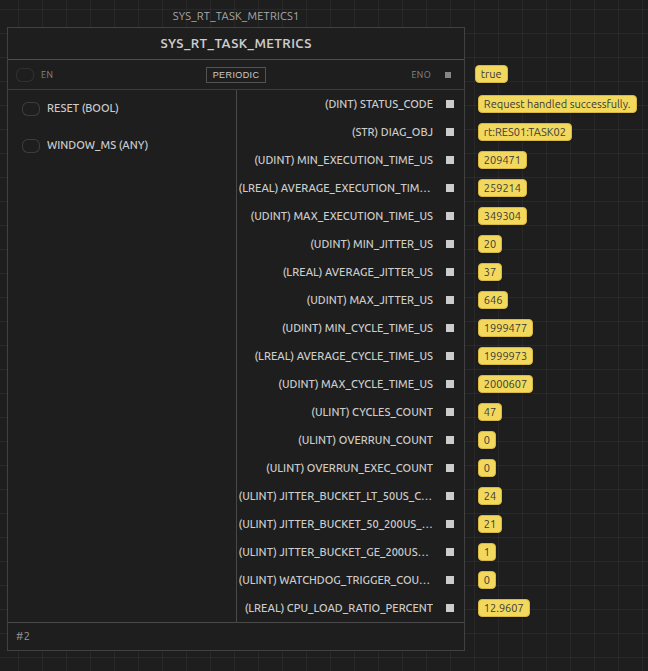
Jitter
up to 5-10 us
Cycle
from 1 ms
Metrics
overrun count
execution time
cycle time
buckets, jitter
Industrial control is still often tied to proprietary PLC hardware, closed engineering environments, and fragmented integration paths.
AnyPLC turns that model into a software-defined platform architecture built for openness, deployment flexibility, and long-term system evolution.
Problem
Legacy PLC systems bind control logic to specific hardware families and closed vendor ecosystems.
That coupling slows modernization, limits architecture freedom, and makes integration with modern infrastructure more difficult.
As systems scale, hardware lock-in and tool fragmentation become operational and commercial constraints.
Solution
AnyPLC separates control software from underlying hardware through a platform built around a SoftPLC Runtime and Engineering IDE.
Control applications can be engineered once and deployed across different infrastructure targets with a consistent lifecycle.
The platform is designed to integrate industrial protocols, hardware platforms, and ecosystem partners into one extensible architecture.
Result
Architecture
The platform combines two key components: a deterministic execution environment and an engineering development environment. It enriches them with script integration, online debugging, diagnostics, and, in the future, orchestration from a single workspace.
Runs deterministic control logic while separating RT execution from NRT services, scripting, and operational diagnostics.
Provides the project-centric environment for building applications, creating custom blocks, deploying updates, and operating systems over time.
Architecture Relationship
Deterministic control remains protected at the core while extensibility is added around it.
Engineering IDE
SoftPLC Runtime
Monitoring and Orchestration
AnyPLC control applications move through a consistent lifecycle from engineering to deployment and operation.
Engineering
01
Create control logic and structure the automation project in the IDE.
02
Generate deployable runtime artifacts and packages for the target environment.
Deployment
03
Define runtime modules, target configuration, and deployment requirements.
04
Deploy the runtime and control application to the selected infrastructure target.
License Activation
05
Activate the runtime instance and bind the deployment to the required platform configuration.
Operation
06
Run, monitor, maintain, and scale the application in the production environment.
The same platform approach carries from first engineering steps to production deployment and later system evolution.
Deploy the platform across the infrastructure model that best fits your industrial architecture and operational requirements.
Direct deployment on standard industrial compute hardware for machine-level and line-level control.
Consolidated execution for distributed control, analytics, and supporting services at the edge.
Deterministic workloads under validated hypervisor configurations with explicit vCPU, IRQ, and memory discipline.
Near bare-metal execution characteristics when static placement and RT-aligned orchestration rules are respected.
The same control platform can be applied across different infrastructure targets while preserving a consistent engineering and operational model.
The platform capabilities that matter most in a virtual PLC architecture.
Runs analytical, diagnostic, or auxiliary scripts under controlled resource limits without compromising deterministic control timing.
Provides a flexible scripting path for both deterministic logic extensions and non-real-time automation tasks.
Enables user-defined functional expansion inside the engineering workflow without collapsing into one monolithic runtime model.
Supports controlled modification of application software on the fly, reducing disruption during modernization and commissioning.
Gives engineers runtime visibility and commissioning control over application behavior with capabilities already present in the platform.
Supports deployment on IPCs, VMs, and containers when OS, hypervisor, and application boundaries are engineered correctly.
AnyPLC is built for industrial deployment scenarios where platform flexibility matters.
OEM-ready control architecture for repeatable automation packages and machine platforms.
A platform model for modernization projects, pilot deployments, and scalable solution delivery.
A migration path away from hardware-locked control estates toward more open architectures.
Control applications aligned with distributed industrial compute infrastructure.
Structured deployment for engineering labs, benches, and validation environments.
Industrial control aligned with broader infrastructure modernization programs.
Use cases remain application-focused, while ecosystem architecture is covered on the dedicated Ecosystem page.
Ecosystem
AnyPLC connects engineers, system integrators, industrial compute vendors, and I/O partners around a runtime and engineering platform that is extensible in software rather than fixed in hardware.
Explore the Ecosystem →The platform is built with controlled deployment and operational predictability in mind.
Runtime design prioritizes deterministic execution and operational stability on validated infrastructure.
Deployment, activation, and target validation are handled through a structured platform workflow.
Platform architecture supports separation between engineering, deployment, and runtime execution contexts where needed.
Security posture is intended to evolve alongside industrial requirements, deployment models, and partner integrations.
Founders / Early Access
We are working with a limited number of early users, design partners, and technical stakeholders while the platform matures.
This is where feedback, pilot deployments, and early ecosystem relationships start to shape the product.
Flexible contribution
Help accelerate platform development and participate in the early AnyPLC community.
Early program
Join the early access cohort and work directly with pre-release platform capabilities.
By discussion
Small cohort of early strategic participants
Work closely with the team on product direction, pilot architecture, and long-term platform positioning.
Talk to us about product evaluation, pilot deployment, ecosystem participation, or hardware compatibility discussions.